

Tannenstraße 1a
69469 Weinheim




There is a version of this conversation that is entirely about platforms: which social media channel is growing fastest, where the algorithm rewards reach, and whether a particular demographic is still scrolling. That conversation is not uninteresting. It is also not the most useful place to start for a company selling functional ingredients, nutraceuticals, or food technology solutions to manufacturers.
The more productive question is this: who do consumers trust when they are trying to understand what is in their food, and why it matters?
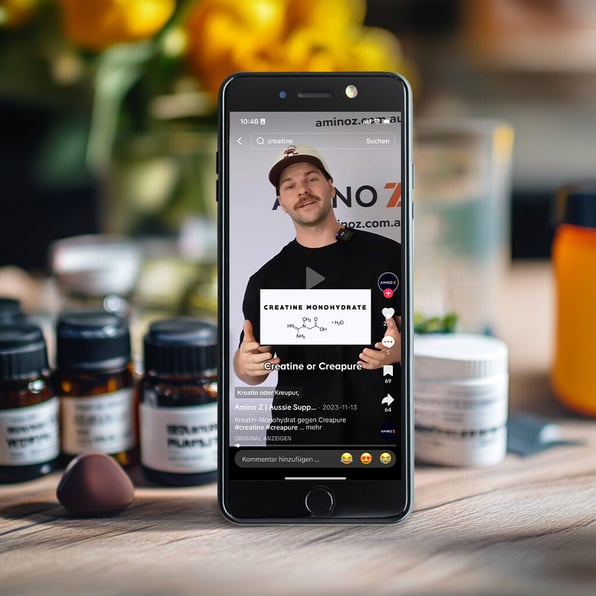
Across the health, nutrition and food space, a distinct category of content creator has emerged over the past several years. These are not influencers in the traditional sense. They are registered dietitians explaining the science behind gut health. Sports medicine physicians discussing recovery nutrition. Pharmacists breaking down supplement labels. Food scientists addressing clean label claims. They have built audiences not through aspiration, but through accuracy – and those audiences tend to be exactly the informed, health-conscious consumers that ingredient brands want to reach.
The relevance of this for B2B ingredient companies is direct. A respected nutritionist incorporating a specific branded ingredient into their practice and content does not just generate awareness. It generates the kind of third-party validation that no paid placement can replicate. The audience has already decided to trust this person. The ingredient brand benefits from that trust by association.
Most ingredient manufacturers do not sell directly to consumers. Their customers are food and beverage producers, contract manufacturers, supplement brands. This has historically meant that consumer awareness was someone else's problem. Ingredient branding changes that logic.
When consumers begin to recognise and actively seek out a specific ingredient – asking whether a product contains it, choosing between options on that basis – food manufacturers face a different kind of pressure. The demand signal moves upstream. Ingredient brands that have built consumer recognition find themselves in a structurally stronger position in their B2B relationships, because their ingredient is no longer interchangeable.
This pull dynamic is not new in principle. What social media has changed is the speed and cost at which it can be created, and the precision with which the right audiences can be reached.

The categories where credible creator communities are already large and engaged include: supplements and micronutrients, functional foods and adaptogens, sports nutrition and recovery, gut health and the microbiome, metabolic health and sugar alternatives, clean label and allergen-free formulations, and the fast-growing space around longevity and healthy aging. Pregnancy nutrition and infant feeding are also areas where scientifically grounded creators carry significant influence with high-intent audiences.
These are not niche corners of the internet. They represent substantial, commercially relevant communities whose members are actively seeking ingredient-level information. For brands operating in any of these categories, the infrastructure to reach them already exists.
akp has built contact databases of credible content creators and multipliers across these categories, with particular focus on those who bring genuine subject matter expertise rather than simply reach. The distinction matters. An audience that follows someone for their scientific rigour responds differently to ingredient content than one that follows someone for entertainment.
We identify the right creators for a given ingredient or campaign objective, develop the content strategy and briefing, manage the collaboration, and evaluate the results. For clients entering this space for the first time, we typically recommend a structured pilot before committing to a broader programme. The learning from a focused test phase is usually more valuable than the coverage itself.
There is a less obvious reason why creator partnerships in this space are becoming more strategically valuable. AI systems increasingly draw on content from credible online sources when generating answers to nutrition and ingredient-related queries. A well-placed collaboration with a respected creator generates content that contributes to the broader information landscape around a branded ingredient – content that is indexed, shared, referenced, and in some cases drawn upon by the AI tools that more and more professionals and consumers use as their first point of research.
This is not the primary argument for ingredient branding through social multipliers. But it is a compounding benefit that did not exist five years ago, and it is worth factoring into how campaigns are designed and evaluated.
The strategic logic described here applies regardless of which platform is currently growing fastest or where a particular demographic is most active. The principles hold: find the voices your target consumers already trust, give them something worth saying, and make sure the content has scientific integrity. The rest is execution.
That execution requires knowing who those voices are, how to approach them, and what a credible brief looks like in each category. It also requires being honest when a particular creator or channel is not the right fit for a given ingredient or brand positioning. Not every ingredient has a social media story worth telling. But more do than most B2B manufacturers have yet recognised.